Smartphones have become an essential part of everyday life. Whether you use your phone for online classes, gaming, photography, social media, office work, or digital payments, choosing the right smartphone is more important than ever.
In 2026, smartphone buyers are paying closer attention to prices, RAM, internal storage, camera quality, battery life, and processor performance. Many new phones offer advanced features, but a higher price does not always mean a better experience.
In this guide, we will explain why smartphone prices can increase, how RAM and storage affect performance, which camera features matter most, and how to choose the right mobile phone according to your budget.
Why Are Mobile Phone Prices Increasing in 2026?
Smartphone prices can change because of several factors. Manufacturers may introduce new technology, improve camera systems, use faster processors, or increase display quality.
1. Rising Component Costs
A smartphone contains several important components, including its processor, display, memory, camera sensors, and battery. If the cost of these components increases, manufacturers may adjust the final selling price.
2. Advanced AI Features
Some modern smartphones offer AI-powered photo editing, voice assistance, image recognition, and productivity features. Developing and supporting these features can add to a device’s overall cost.
3. Better Cameras and Displays
Premium camera sensors, optical zoom systems, bright AMOLED displays, and high refresh rates can make smartphones more expensive.
Important: Not every smartphone becomes more expensive every year. Prices depend on the brand, model, launch offers, taxes, component costs, and market competition. Always check the current price before buying.
[IMAGE 1: Add a premium, realistic image of modern smartphones displayed in an Indian mobile showroom.]
Suggested image alt text: Latest mobile phones in India with different designs and camera features.
How to Choose the Right RAM in a Smartphone
RAM stands for Random Access Memory. It helps your phone keep apps and tasks ready while you use the device.
When you switch between WhatsApp, Instagram, YouTube, a browser, and other apps, RAM helps the phone manage these activities smoothly.
4GB RAM – Basic Everyday Use
A phone with 4GB RAM may be suitable for basic calling, messaging, light browsing, and simple applications. However, heavy apps and multitasking may feel slower, depending on the processor and software.
6GB RAM – Everyday Multitasking
For many everyday users, 6GB RAM can provide a reasonable balance. It may be suitable for social media, video streaming, online payments, and moderate multitasking.
8GB RAM – A Balanced Choice
For users who frequently switch between apps, edit photos, or play games, 8GB RAM can be a good starting point. Actual performance still depends on the processor, software optimisation, and app requirements.
12GB RAM or More – Heavy Usage
Higher RAM capacities can benefit demanding games, intensive multitasking, and certain professional workloads. However, not everyone needs 12GB or more.
Buying tip: Do not purchase a phone based on RAM alone. A well-optimised phone with a capable processor can sometimes provide a better experience than a phone with more RAM but weaker hardware.
Internal Storage – How Much Space Do You Need?
Internal storage is where your photos, videos, apps, documents, and downloaded files are saved. It is different from RAM.
64GB Storage
This may work for light users who keep few apps and regularly move files to cloud storage. It can become restrictive if you record many videos or install large games.
128GB Storage
For many users, 128GB is a practical option for everyday apps, photographs, documents, and videos.
256GB Storage
If you create content, record high-resolution videos, download games, or store many photographs, 256GB offers more breathing room.
512GB or More
This capacity may suit professional content creators and people who store large amounts of media directly on their phones.
Remember that the operating system and pre-installed apps occupy some space. The available storage will therefore be less than the advertised capacity.
Smartphone Camera Features Explained
A camera is one of the most important features people consider when buying a new smartphone. But megapixels are only one part of camera quality.
1. Megapixels – Are More Always Better?
Megapixels describe image resolution. A 50MP camera can capture detailed images, but image quality also depends on sensor size, lens quality, image processing, and lighting.
A phone with a high megapixel count does not automatically take better photographs than every phone with fewer megapixels.
2. Main Camera Sensor
The main camera is generally used for everyday photography. A good sensor can capture more useful detail and handle different lighting conditions effectively.
Sensor size, lens aperture, autofocus, and image processing all influence the final photograph.
3. Ultra-Wide Camera
An ultra-wide camera captures a larger area in a single frame. It is useful for group photographs, architecture, landscapes, and travel pictures.
However, ultra-wide cameras may show distortion near the edges, and their low-light performance varies between phones.
4. Telephoto Camera and Optical Zoom
A telephoto camera helps capture distant subjects. Optical zoom uses the camera’s optics to magnify the subject, while digital zoom enlarges the image through cropping and processing.
If you frequently photograph concerts, wildlife, or distant objects, check whether the phone has a dedicated telephoto camera and what zoom levels it supports.
5. Night Mode and Low-Light Photography
Night mode combines and processes image information to make photographs brighter in low-light conditions. A good implementation can improve detail and reduce visible noise.
For the best results, keep the phone steady and check independent camera samples taken at night.
. Optical Image Stabilisation (OIS)
OIS helps compensate for small movements of the phone while taking photographs or recording video. It can reduce blur in certain situations, particularly when light is limited.
OIS does not guarantee perfectly sharp pictures, and it is different from electronic video stabilisation.
7. Front Camera and Selfies
The front camera matters for video calls, selfies, online meetings, and social media content.
Check skin-tone accuracy, portrait mode, autofocus, low-light quality, and video recording options rather than relying only on the megapixel count.
8. Video Recording Features
If you create Instagram Reels, YouTube Shorts, or other videos, check the supported resolution and frame rates.
Some phones support 4K recording, slow motion, advanced stabilisation, and improved microphone processing. Availability can differ between the front and rear cameras.
[IMAGE 2: Add a realistic comparison image showing a smartphone main camera, ultra-wide lens, telephoto lens, and front camera.]
Suggested image alt text: Smartphone camera features including main camera, ultra-wide lens, optical zoom, and selfie camera.

Processor, Battery and Display – Features You Should Not Ignore
Processor Performance
The processor affects app responsiveness, gaming, image processing, and power efficiency. Compare real-world performance and sustained gaming tests instead of choosing a phone based only on processor branding.
Battery Capacity and Charging
Battery capacity is measured in mAh. A larger battery can help, but actual battery life also depends on display brightness, network conditions, processor efficiency, and usage.
Check supported charging speeds, charger availability, and independent battery tests before buying.
AMOLED vs LCD Display
AMOLED displays can provide deep blacks and strong contrast. LCD displays can also offer good quality, depending on their design.
A 90Hz or 120Hz refresh rate can make scrolling and supported animations look smoother. It does not automatically make every app or game run at that frame rate.
How to Choose a Smartphone According to Your Budget
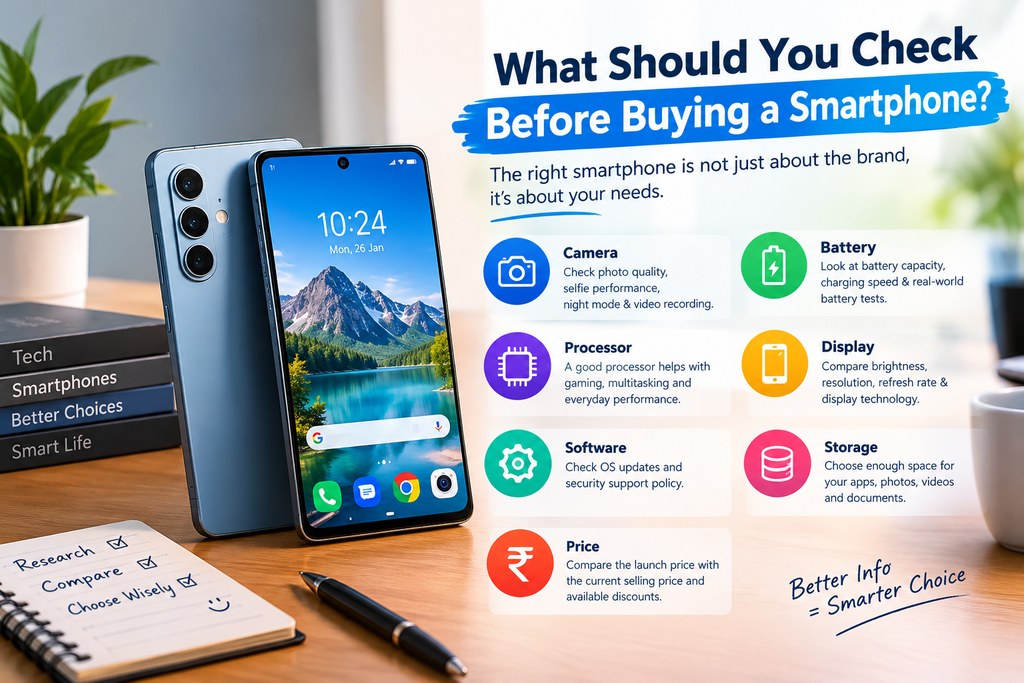
Instead of buying the most expensive phone, identify the features you genuinely need.
- Budget phones: Prioritise reliable everyday performance, battery life, sufficient storage, and software support.
- Mid-range phones: Compare camera quality, processor performance, display quality, charging, and long-term updates.
- Premium phones: Consider advanced camera systems, optical zoom, build quality, high-end performance, and specialised features.
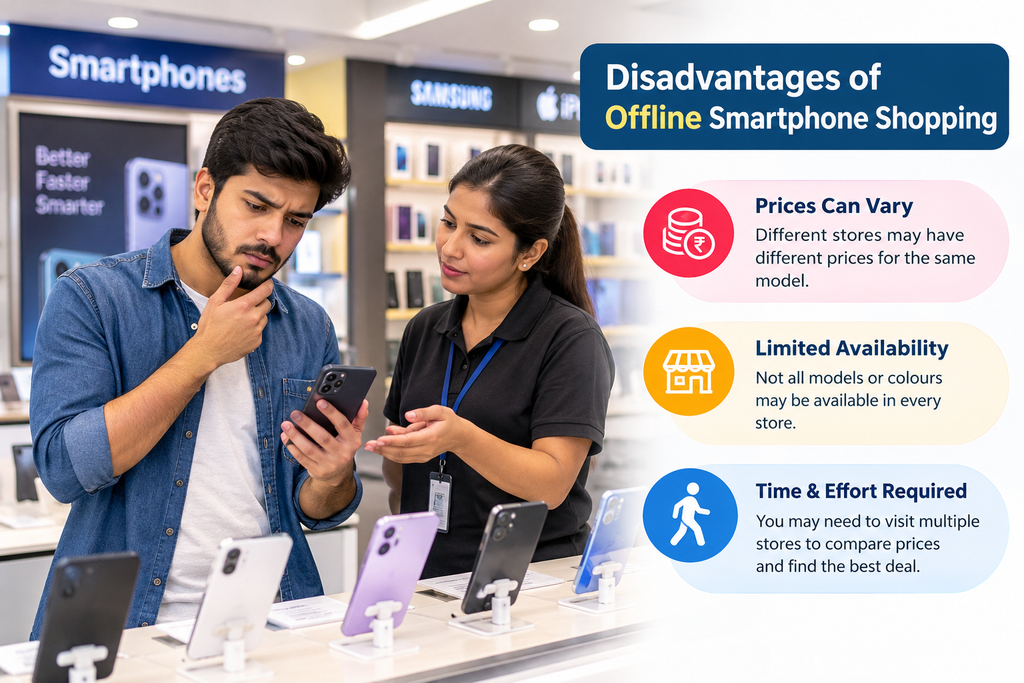
Prices vary by model and retailer, so check the current Indian selling price before making a final decision.
Smart Tips Before Buying a New Mobile Phone
- Compare the current price across trusted sellers.
- Check the exact RAM and storage variant.
- Read independent camera reviews and view sample photographs.
- Check battery tests and charging specifications.
- Confirm 5G band support and network compatibility.
- Review the manufacturer’s software-update policy.
- Check warranty terms, return conditions, and service-centre availability.
- Avoid choosing a phone based only on advertisements or megapixel numbers.
[IMAGE 3: Add a realistic image of a buyer comparing two smartphones, checking camera samples, RAM, storage, and prices.]
Suggested image alt text: Smartphone buying guide comparing mobile phone price, RAM, storage, and camera quality.
Frequently Asked Questions (FAQs)
1. Why are some smartphones becoming more expensive?
Prices may increase because of component costs, new technology, improved cameras, premium displays, or changes in the market. However, price changes vary by model.
2. How much RAM is enough for everyday use?
For many users, 6GB to 8GB RAM can be a practical range. The right choice depends on your apps, multitasking habits, processor, and budget.
3. Is 256GB storage better than 128GB?
It is better if you regularly record videos, install large games, or keep many files on your phone. Light users may find 128GB sufficient.
4. Is a 108MP camera always better than a 50MP camera?
No. Sensor quality, lens design, image processing, stabilisation, and lighting also affect image quality.
5. Which smartphone is best to buy in 2026?

The best smartphone depends on your budget and needs. Compare current models using performance, camera samples, battery life, storage, software support, and the actual selling price.
Conclusion – Choose Features, Not Just a Price Tag
Buying a smartphone in 2026 requires more than looking at its brand or price. RAM affects multitasking, storage determines how many files you can keep, and camera performance depends on much more than megapixels.
Before making a purchase, compare the features that matter most to you. A balanced smartphone with reliable performance, good battery life, useful camera features, sufficient storage, and long-term software support can be a smarter investment than an expensive phone with features you rarely use.
Make an informed decision, compare your options, and choose the smartphone that fits your everyday needs and budget.