Many businesses still depend mainly on local customers and offline sales. A shop, showroom, office, or local service may already have a good reputation, but a new customer searching for the business online may not find enough useful information.
This creates an important opportunity for businesses that want to expand their reach and make their services easier to discover.
Taking an offline business online does not simply mean creating an Instagram account or building a website. It means creating a clear digital presence where customers can easily understand your brand, products, services, location, reviews, and customer experience.
If your business is already performing well offline, digital marketing can help you bring that existing reputation online and reach potential customers who may not know about your business yet.
1. Why Should an Offline Business Go Online?
Customers often look for information online before buying a product or service. They may search for a business on Google, check its social media profiles, read customer reviews, compare available options, or visit its website to learn more.
If your business has little or no online presence, potential customers may find it difficult to understand what you offer, where you are located, or how they can contact you.
An online presence also allows your business to communicate with customers beyond normal shop or office hours. People can discover your business, view your services, read information, and contact you through digital channels.
The purpose of an online presence is not simply to gain more followers. It is to make useful business information easily available and give customers a simple way to connect with your business.
Practical Steps to Build an Online Brand
. Set Up Your Business Online
Start by creating a basic online presence for your business. This can include a professional website, social media profiles, and a Google Business Profile.
Make sure your business name, address, phone number, working hours, services, product information, and other important details are accurate and updated.
Your online profiles should clearly explain what your business does and who it serves.
A customer should be able to understand your business and find a way to contact you without having to search through multiple pages.

2. Create Consistent Business Branding
Building an online brand requires more than just having a logo. Your logo, colors, fonts, images, and communication style should have a consistent look across different platforms.
For example, if you own a local clothing store, your Instagram profile, website, promotional posts, and advertisements should have a similar visual identity.
Using completely different designs, colors, and communication styles across platforms can make your business look less consistent.
A clear brand identity helps customers recognize your business more easily and creates a more professional experience when they interact with your business online.
3. Share Useful Content on Social Media
Do not use social media only to promote your products or services. Share content that is useful and relevant to your customers.
You can post product tips, frequently asked questions, customer experiences, behind-the-scenes content, new arrivals, educational information, and helpful tips related to your industry.
For example, if you run an electronics business, you could create content explaining what customers should consider before buying a new smartphone.
If you run a salon, you could share simple hair-care tips, service information, common customer questions, and before-and-after results where appropriate.
This type of content provides useful information while also introducing customers to your products and services.
4. Focus on Local SEO
If your business serves customers in a specific area, Local SEO can help improve your online visibility for relevant local searches.
Keep your business information updated and make sure your website clearly explains your products or services and the areas you serve.
Your Google Business Profile should also contain accurate information, including your business category, contact details, location, working hours, photos, and other relevant information.
Your website can also include useful location-based information naturally, especially if you serve multiple areas.

You can encourage genuine customers to leave reviews based on their actual experiences. These reviews can provide useful information to people who are discovering your business for the first time.
5. Build Trust Through Customer Reviews
Trust is an important part of building an online brand. A new customer may see your business online for the first time, so genuine reviews, testimonials, and customer experiences can provide useful context.
Ask existing customers for honest feedback and present genuine testimonials where appropriate on your website or social media.
You can also respond professionally to customer reviews and questions. This shows that your business pays attention to customer experiences.
Avoid fake reviews or misleading claims. Long-term trust is built through real customer experiences, accurate information, and consistent service.
6. Make Your Website Easy to Use
Your website should do more than simply display information. It should make it easy for visitors to understand your business and take the next step.
Clearly present your products or services, use simple language, and make contact options easy to find.
For example, if a visitor is interested in your service but cannot quickly find your phone number, enquiry form, WhatsApp option, or other contact method, they may leave without contacting you.
Your website should also work properly on mobile devices because many customers access business websites through their smartphones.
A simple, clear, fast, and mobile-friendly website can make the customer journey easier and help visitors find the information they need.

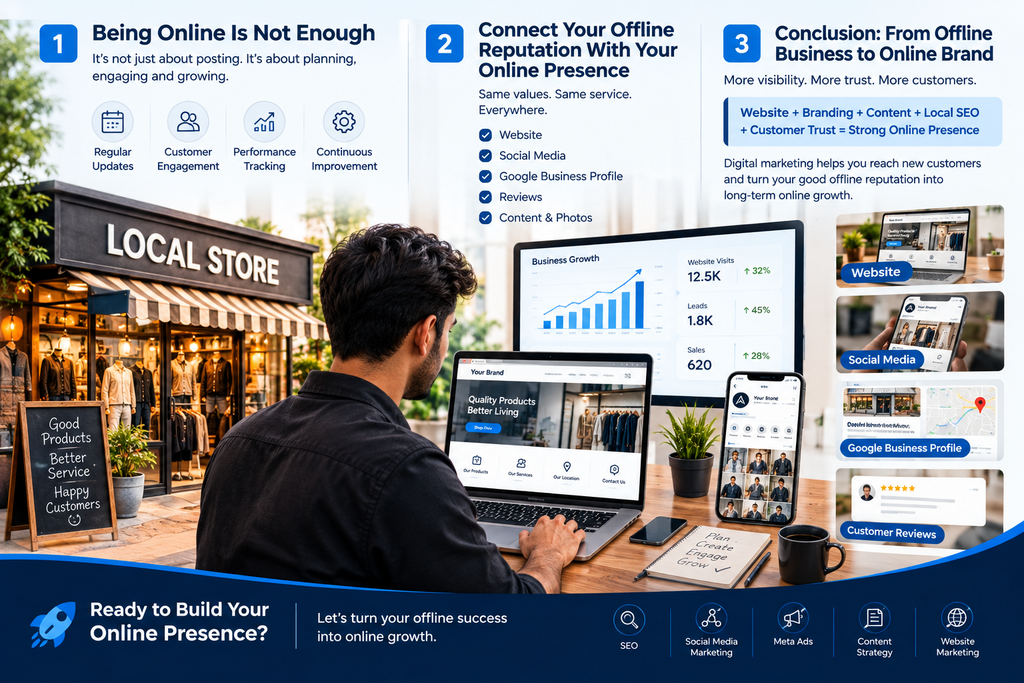
Being Online Is Not Enough
A common mistake is creating a social media account, publishing a few posts, and then waiting for results.
Building an online brand is an ongoing process. Your business needs regular content updates, accurate information, customer engagement, performance tracking, and continuous improvement.
You should regularly check which content receives engagement, which pages attract visitors, where enquiries are coming from, and which marketing activities are helping your business goals.
There is no single strategy that works for every business. Your approach should be based on your target customers, industry, location, competition, available budget, and business objectives.
Digital marketing works better when every activity has a clear purpose rather than simply posting content without a plan.
Connect Your Offline Reputation With Your Online Presence
If customers already trust your offline business, that trust should also be visible online.
Your website, social media profiles, Google Business Profile, customer reviews, photographs, and content should provide a consistent picture of your business.
For example, if customers know your store for helpful service and quality products, your online content should communicate the same values.
The goal is to create a connected customer experience where people can discover your business online and receive the same level of information and professionalism they expect when they visit you offline.
Conclusion: From Offline Business to Online Brand
Turning an offline business into an online brand is not just about creating a website or opening a social media account. It is about building a digital presence where customers can clearly understand your business, find useful information, explore your products or services, and develop confidence in your brand.
Professional Website + Consistent Branding + Useful Content + Local SEO + Customer Trust = Strong Online Presence
If your business already has a good offline reputation, digital marketing can help you bring that reputation online and make your business easier to discover.

Services such as SEO, Social Media Marketing, Meta Ads, Content Strategy, and Website Marketing can support different parts of this process when they are planned around clear business goals.
Today, customers may experience your business both offline and online. Building a professional online presence helps make sure that your digital identity reflects the quality, service, and trust you have already built through your offline business.